
Every four years the country picks a direction, and the race starts earlier than most families realize. If you want to understand the 2028 presidential election Republicans are heading toward, you need the calendar, the rules and the map in one place.
This is that place. We lay out the road from today to Inauguration Day 2029, explain how a Republican becomes the nominee, and point you to the steps you can take now.
Quick answer: The general election is Tuesday, November 7, 2028, and the inauguration is January 20, 2029. As of November 2, 2026, no major Republican has formally declared. The GOP nominee will be chosen through state contests and a national convention, and the party’s calendar is not final yet.
Where the Republican road to 2028 stands today
As of November 2, 2026, the field is a field of possibilities, not declared candidates. No major Republican has formally entered the 2028 race. Anyone you hear about is a potential candidate, and we will say so every time.
The 2026 midterm elections happen tomorrow, Tuesday, November 3, 2026. All 435 House seats, about a third of the Senate and 36 governorships are on the ballot. We are not going to guess at results here. After the 2026 midterms, we will update this page, and our guide on how midterm results shape the next presidential race explains why those results matter so much.
Why does this matter to a family that just wants good government? Because the presidency sets the tone for the economy, the courts, the border, national defense and your freedom to protect your own home. The earlier you pay attention, the less you have to rely on slogans.
The timeline from now to Inauguration Day 2029
Presidential campaigns are long, and the official dates are only part of the story. Here is the roadmap in plain terms.
Phase one: after the midterms
Once the 2026 midterm results settle, the unofficial campaign begins. Potential candidates travel, write books, raise money and visit early states. Most hold off on formal announcements, because declaring early starts the clock on scrutiny and fundraising rules. We will note any formal announcement when it happens, not before.
Phase two: the primary season
The nominating contests run in the winter and spring of 2028. Democrats have approved their early window, and Republicans are still finalizing theirs. We cover both in the sections below.
Phase three: conventions, fall campaign and Election Day
After the primaries, each party holds a national convention to formally choose its nominee. The fall campaign then runs to Election Day on Tuesday, November 7, 2028. Our guide on the 2028 Republican National Convention will carry the details once the city and dates are set. Right now they are not final, so we are not stating them.
Phase four: electors and the inauguration
Electors meet on December 18, 2028, and the new president is sworn in on January 20, 2029.
The road to the White House is long, and the voters who show up early shape it most.
Key dates table
Here are the dates we have verified as of November 2, 2026. Anything not on this list is not settled, and we say so rather than guess.
| Date | Event |
|---|---|
| Tuesday, November 3, 2026 | 2026 midterm elections (435 House seats, about a third of the Senate, 36 governors) |
| January 22, 2028 | Democratic early window opens: South Carolina |
| February 1, 2028 | Democratic contest: Nevada |
| February 8, 2028 | Democratic contest: New Hampshire |
| February 15, 2028 | Democratic contest: New Mexico |
| February 22, 2028 | Democratic contest: Michigan |
| February 29, 2028 | Democratic contest: Virginia |
| March 7, 2028 (expected) | Super Tuesday |
| Tuesday, November 7, 2028 | General election |
| December 18, 2028 | Electors meet |
| January 20, 2029 | Inauguration Day |
The Democratic dates were approved by the DNC on August 15, 2026. The Republican calendar, convention city and convention dates are not final, so you will not find them in this table. For a fuller breakdown, see our guide on every key date in the 2028 presidential election.

How the Republican nomination works
Americans do not vote directly for a party’s nominee in one national contest. Instead, each state runs its own primary or caucus, and those results award delegates. The delegates then vote at the national convention.
Primaries and caucuses
A primary works like a regular election: you go to the polls and cast a ballot. A caucus is a meeting where party members gather, discuss and vote, which takes more time but draws the most committed activists. Which states use which format, and who can participate, depends on state law and party rules.
Delegates and the convention
Delegates are the party members who formally choose the nominee. A candidate who collects enough of them wins the nomination. The party writes its own rules for how delegates are awarded, and those rules can change between cycles, which is why we keep this page dated. Our deeper guide, the 2028 Republican primary calendar, rules and what we know, will track the rule changes as they come.
Iowa and New Hampshire
Republicans are expected to keep Iowa first on their 2028 calendar, according to RNC reports in September 2026. That is a report and an expectation, not a final calendar. New Hampshire, meanwhile, has a state law requiring it to hold the first primary in the nation. Expect that tension between party calendars and state law to be part of the story.
Super Tuesday is expected on March 7, 2028, when a large group of states vote on the same day. That is often where a frontrunner pulls away or a long race begins.
Who might run: the potential Republican field
To be clear, as of November 2, 2026, no major Republican has formally declared a 2028 run. The names below are widely discussed as potential candidates. That is all they are.
- JD Vance, Vice President
- Marco Rubio, Secretary of State
- Ron DeSantis, Florida governor
- Ted Cruz, Texas senator
- Brian Kemp, Georgia governor
- Donald Trump Jr.
- Vivek Ramaswamy
- Glenn Youngkin, former Virginia governor
- Nikki Haley
- Josh Hawley
- Tim Scott
- Sarah Huckabee Sanders, Arkansas governor
- Byron Donalds
- Tucker Carlson
Our own view, labeled as opinion: judge a candidate by his or her record and the policies on offer, not by who has the loudest crowd on social media. We will keep a running list in our 2028 Republican candidates tracker, and we will only change a name’s status when it is official.
Judge the record and the plan, not the volume of the crowd.
What the Constitution says about who can run
The Constitution sets a short list of requirements. A president must be a natural-born citizen, at least 35 years old and a US resident for 14 years. Our guide on who can run for president goes through each one.
The 22nd Amendment adds a limit: a president can be elected to no more than two terms. People often ask about a third term, and the details deserve a careful read of the text. We handle that in our guide on whether Trump can run again in 2028. We will stick to the amendment’s text and label any opinion as opinion.
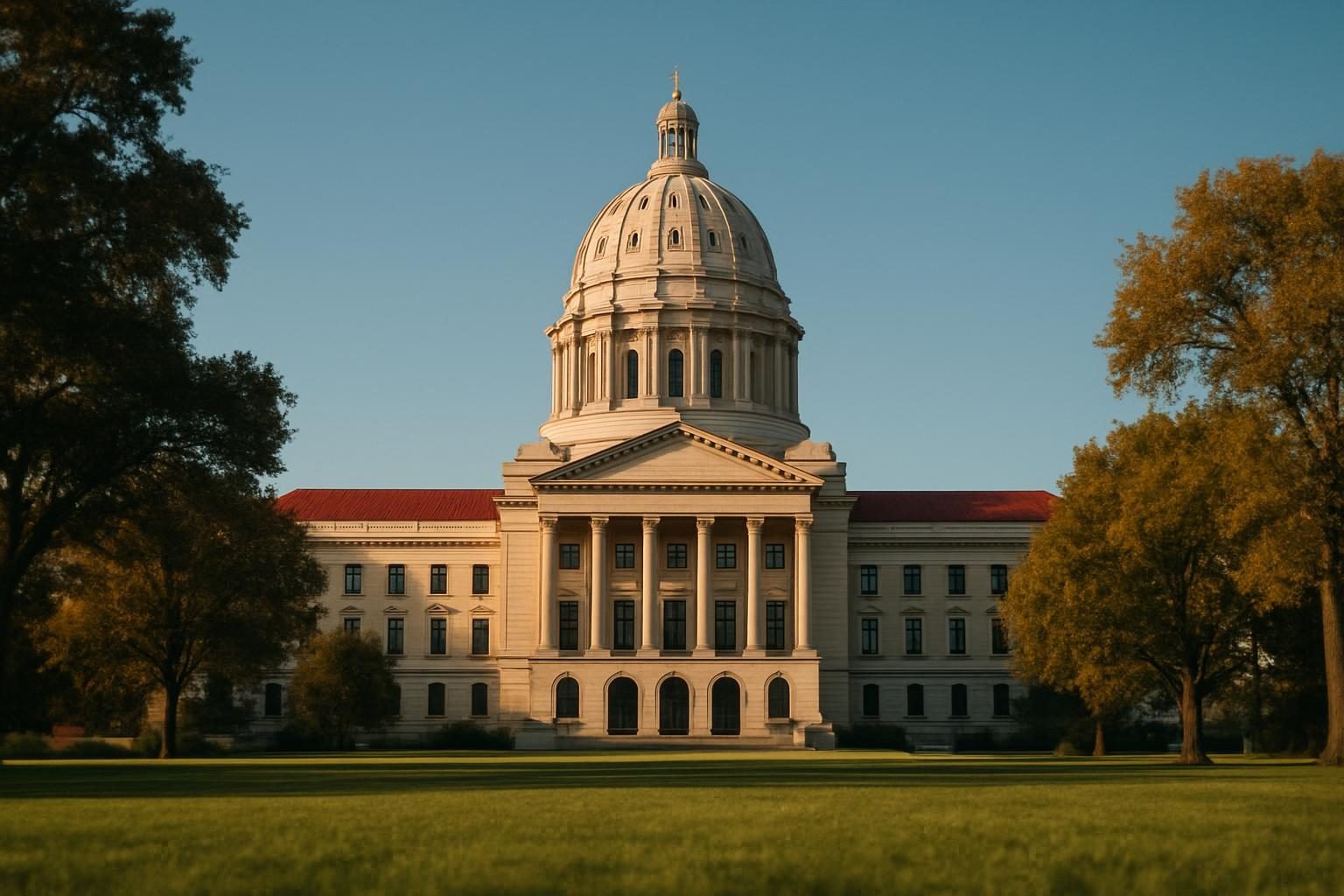
The 2028 map: how 270 electoral votes are won
The president is chosen by the Electoral College, not by a single national vote count. There are 538 electoral votes in total, and a candidate needs 270 to win. Nearly every state awards its electoral votes to whoever wins the state, which is why campaigns concentrate on a handful of closely divided places.
Our explainer on how the Electoral College works and why the Founders chose it covers the history and the reasoning. If you want to see where Republicans could gain ground, start with the 2028 electoral map and the 2028 swing states Republicans need.
We are not publishing state-by-state forecasts here, because it is too early and numbers change. What we can say is the plain arithmetic: no candidate wins without a coalition of states, and a coalition is built one community at a time.
Lessons from earlier Republican waves
History helps. Republicans have won big before, and the stories carry lessons about organization, message and timing. Two worth knowing are the 1994 Republican Revolution and the Contract With America and the 2010 Tea Party wave. For the broader picture, our guide on Republican Party history from Lincoln to today traces the arc, and our explainer on what a red wave means defines the term.
Opinion, clearly labeled: waves rarely come from a single clever ad. They come from voters who feel the country is drifting and a party that gives them a clear, believable reason to act.
The Second Amendment and 2028
For many of our readers, the Second Amendment is not an abstraction. It is about your ability to protect your family. The presidency matters here because presidents appoint judges and shape federal policy, and courts have drawn the lines that govern your rights.
Here are the landmark cases, in order:
- District of Columbia v. Heller (2008): recognized an individual right to keep a handgun at home for self-defense.
- McDonald v. City of Chicago (2010): applied that right to the states.
- NYSRPA v. Bruen (2022): struck down “proper cause” permit rules and set a text-history-tradition test.
- United States v. Rahimi (2024): upheld the federal ban for people under domestic-violence restraining orders.
On carry laws, about 29 states now allow permitless, or “constitutional,” carry. Laws change often, so confirm current rules with your state before you act. There is no federal concealed carry reciprocity law, so whether your permit is honored elsewhere is decided state by state. Our plain-English guide to concealed carry laws by state is the place to dig in. This site is educational only, and nothing here is legal advice.
Travel is a common trouble spot. Federal law (FOPA, 18 U.S.C. 926A) protects transport of a lawfully owned, unloaded, locked-away firearm through states, with limits. If you fly, firearms go only in checked baggage, unloaded, in a locked hard-sided case, declared at check-in. See tsa.gov for the current rules.

Get ready at home, not just at the ballot box
Elections matter, but a well-run household does not wait on Washington. Self-reliance is a conservative habit as old as the country: keep a few weeks of food and water, know your plan if the power goes out, and look after the people on your street.
Our emergency preparedness checklist and layered home defense guide are built for ordinary families, not doomsday hobbyists. If you want the ideas behind all of this, what conservatives believe: the core principles explained lays them out in plain English.
Many readers also like to show their pride in a quiet, practical way. We are preparing a drop list for patriotic merch, which you can sign up for in the box below. It is separate from our reporting, and we are not partnered with any brand.
Wear it proud
Limited drops of patriotic tees, hats and flags. Join the list and get first dibs on the next drop.
Join the drop list →Key takeaways
- The general election is Tuesday, November 7, 2028, with electors meeting December 18, 2028, and inauguration January 20, 2029.
- As of November 2, 2026, no major Republican has formally declared; everyone named is only a potential candidate.
- The GOP calendar, convention city and convention dates are not final, though Iowa is expected to stay first.
- A candidate needs 270 of 538 electoral votes, and the 22nd Amendment limits a president to two elected terms.
- Gun laws vary by state and change often; confirm current rules with your state agency.
- Registering, preparing your household and staying informed are the most useful things you can do now.
Take action: Visit vote.gov this week, choose your state, and confirm your registration and address are current. It takes a few minutes, and it is the single most useful step you can take before 2028. If you need a full walkthrough, see our guide on how to register to vote.
Where to start
This is a big topic, so here is a simple roadmap.
- Confirm your registration at vote.gov or with your state election office.
- Learn the calendar: bookmark the key dates table above and check back as we update it.
- Understand the nomination: read about primaries, caucuses and delegates.
- Know your state’s gun laws through your state agency, and treat reciprocity as a state-by-state question.
- Prepare your household: water, food, a family plan and a layered approach to home safety.
- Get involved locally: county party meetings, school boards and volunteer groups shape what comes next.
You can also browse everything we publish on the topic in our 2028 Election category.
Last updated November 2026. Dates and candidate news change fast; we update this page as things are announced.
Frequently asked questions
Has any Republican officially announced a run for president in 2028?
As of November 2, 2026, no major Republican has formally declared. Names like JD Vance, Marco Rubio, Ron DeSantis and others are discussed as potential candidates only. We update this page when anything changes.
When is the 2028 presidential election?
Tuesday, November 7, 2028. Electors meet on December 18, 2028, and the inauguration is January 20, 2029.
How does a Republican win the nomination?
Candidates win delegates through state primaries and caucuses, then delegates vote at the national convention. The party sets its own rules and calendar, and the 2028 GOP calendar is not final yet.
Can Donald Trump run again in 2028?
The 22nd Amendment limits a president to two elected terms. We cover what the amendment says and the arguments people raise in a dedicated guide, and we label opinion as opinion.
How do I make sure I can vote in 2028?
Check your registration status and the rules for your state at vote.gov or with your state election office. Do it well before any deadline, since rules and deadlines vary by state. North Dakota is the one state with no voter registration.